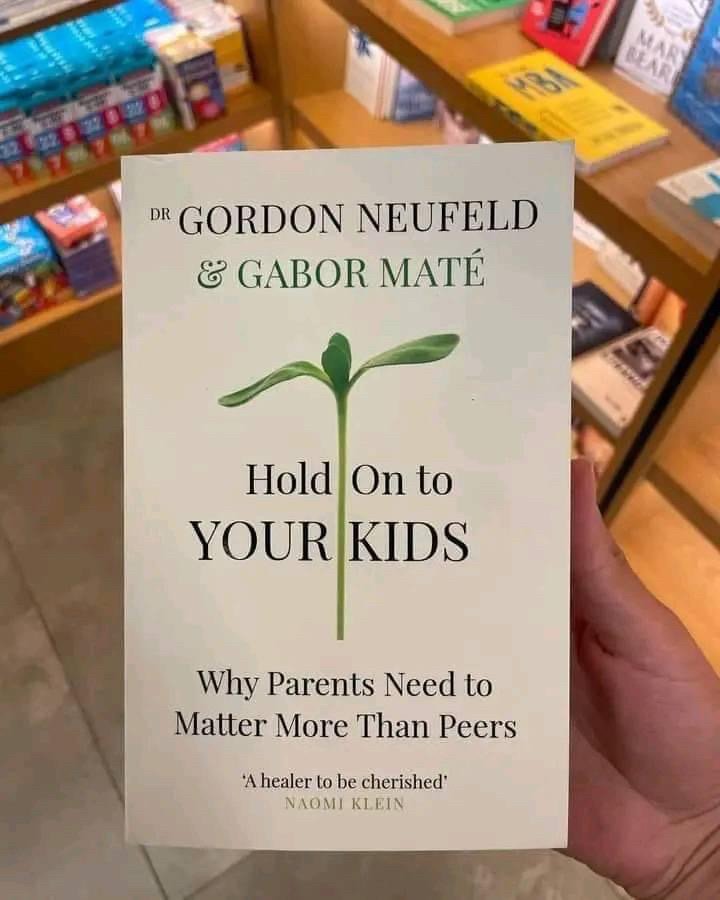
"Hold on to Your Kids: Why Parents Need to Matter More Than Peers" by Gordon Neufeld and Gabor Maté delves into the crucial role parents play in the development and well-being of their children, emphasizing the importance of maintaining a strong, nurturing connection. The book argues that in modern society, children are increasingly looking to their peers for guidance, norms, and values, a shift that can have detrimental effects on their development and mental health.
Here are key lessons from the book
1. The Importance of Parental Connection: The foundational premise is that children need to feel a strong connection to their parents or primary caregivers for healthy emotional and psychological development.
2. The Problem with Peer Orientation: Peer orientation refers to children turning to their peers, rather than their parents, as their primary source of guidance, values, and sense of belonging. While friendships are important, an overreliance on peer relationships can lead to issues like increased anxiety, aggression, and conformity to peer norms that may not be in the child’s best interest.
3. Cultivate a Strong Parent-Child Attachment: The authors stress the importance of developing and maintaining a strong, loving attachment between parents and children. This involves being emotionally available, responsive, and sensitive to a child’s needs.
4. Understand Developmental Needs: Recognizing and meeting the developmental needs of children at various stages is crucial for helping them grow into secure, independent, and resilient individuals.
5. The Role of Play in Attachment: Play is highlighted as a vital component of developing a strong parent-child attachment. It's a way for parents to connect, communicate, and understand their children.
6. Counteract the Culture of Peer Orientation: The book provides strategies for parents to reclaim their natural role in their children's lives, suggesting ways to gently disengage children from unhealthy peer dependencies and rebuild the parent-child connection.
7. Navigating the Challenges of Technology: With the rise of social media and smartphones, peer pressure and influence have intensified. The authors offer advice on managing children’s exposure to technology and fostering real-life connections.
8. The Importance of Community: Building a supportive community that shares similar values can reinforce parental influence and provide a broader support network for both parents and children.
9. Educational Implications: The book also touches on the implications of peer orientation in educational settings, encouraging schools and educators to support strong parent-child relationships.
10. Healing Broken Bonds: For parents and children who have experienced a breakdown in their relationship, the authors offer hope and strategies for healing and reconnecting.
"Hold on to Your Kids" serves as a guide for parents to understand the critical importance of their role in their children's lives, especially in the face of the challenges posed by a peer-oriented culture. It encourages parents to actively engage in building and maintaining a strong, nurturing bond with their children, setting the foundation for their children’s healthy development and emotional well-being.
1